
Ein Einstiegspunkt für Ihr gesamtes Unternehmen
Abfragen, Analysieren und Auslösen von Prozessen anhand realer Daten in Echtzeit – ohne zusätzliche Tools.
Integrationen und Richtlinienverwaltung
Daten, Sicherheit und vernetzte Systeme
Babylon ist darauf ausgelegt, sich in bestehende Geschäftssysteme zu integrieren und in einer verwalteten, sicheren und skalierbaren Umgebung zu arbeiten. Es entstehen keine neuen Informationssilos; Es verbindet sich direkt mit Datenbanken und Plattformen, die bereits im Unternehmen vorhanden sind, wie z. B. ERP, CRM, E-Commerce und andere Betriebssysteme, und verarbeitet Daten in ihrem ursprünglichen Kontext. Die Verbindung erfolgt direkt, ohne neue Archive oder Duplikate, sodass Sie Informationen zentralisiert und konsistent abfragen, gegenprüfen und verwenden können. Dieser Ansatz ermöglicht nicht nur den Zugriff auf Daten, sondern aktiviert auch Betriebslogik und Funktionen direkt auf vorhandenen Systemen. Babylon ist kein geschlossenes System – es erstreckt sich innerhalb des Geschäftsökosystems und macht Daten dort verfügbar und nutzbar, wo sie benötigt werden.
Ein zentrales Element dieses Modells ist das Policy Management. Mit Babylon können Sie Zugriffs-, Sichtbarkeits- und Betriebsregeln auf Unternehmensebene definieren und so die volle Kontrolle über die Nutzung von Daten und Funktionen gewährleisten. Richtlinien legen genau fest, wer auf Informationen zugreifen kann, welche Daten sichtbar sind und welche Aktionen zulässig sind, abgestimmt auf die Organisationslogik. Arbeitsbereiche können detailliert nach Benutzern, Rollen und Geschäftsfunktionen konfiguriert werden. You can structure distinct environments, as scalable as the organisation itself, where each user works only on relevant information for their scope. This provides data protection in the round, avoiding unnecessary access and maintaining separation between business areas. Security is not only about the outside of the company but also what happens inside. Every organisation has different roles—management, production, sales, marketing, administration—and not everyone needs the same information. Babylon applies the «need to know» principle, so each user accesses only data aligned with their responsibilities. The result: greater security, because sensitive information reaches only those who need it; fewer errors, because each user works on data suited to their role; and better decision quality, because information is clearer, focused and contextualised.
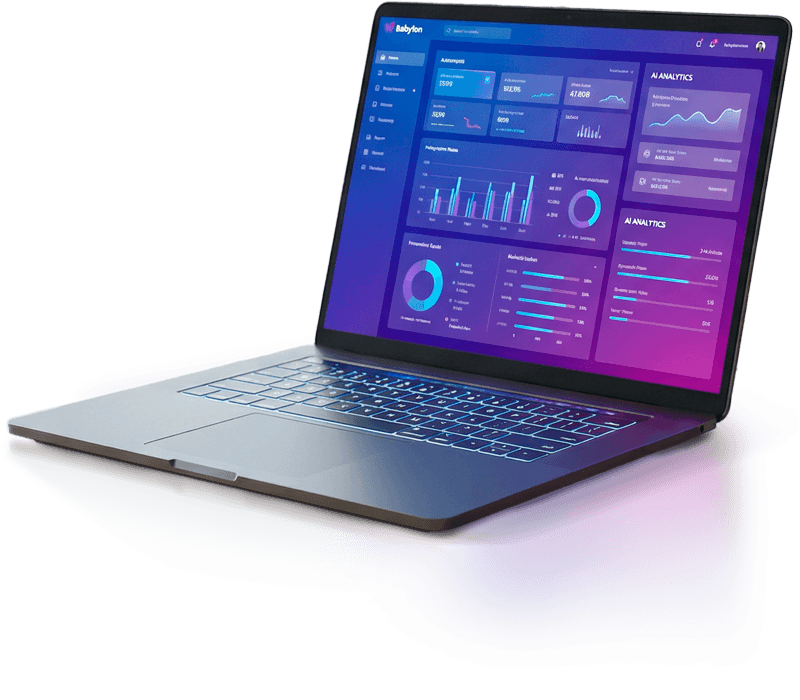
Babylon does not stay isolated: it brings information and features straight into the environments where people work every day. Analytics, dashboards and indicators do not have to live in a separate platform—they can be embedded in software already used in the company, keeping continuity in operational flows. That ensures integration and consistency across processes, without switching tools. The company can keep working in its own systems without changing how it operates or adding new platforms to manage. Babylon is not another tool that forces change—it is a layer of enhancement on existing systems. It fits the business ecosystem and extends its capabilities, making data more accessible, usable and operational. Information stays consistent with user profiles and defined policies, even when distributed across different systems. For example, you can embed a CRM dashboard in the sales stack, giving the sales team only client-relevant data, or surface production analytics inside tools used by operations. Likewise you can build financial views for management with strategic indicators and aggregated data. Babylon slots into existing business systems without replacing them, maintaining consistency, control and operational continuity, and letting the company evolve without changing tools or processes.